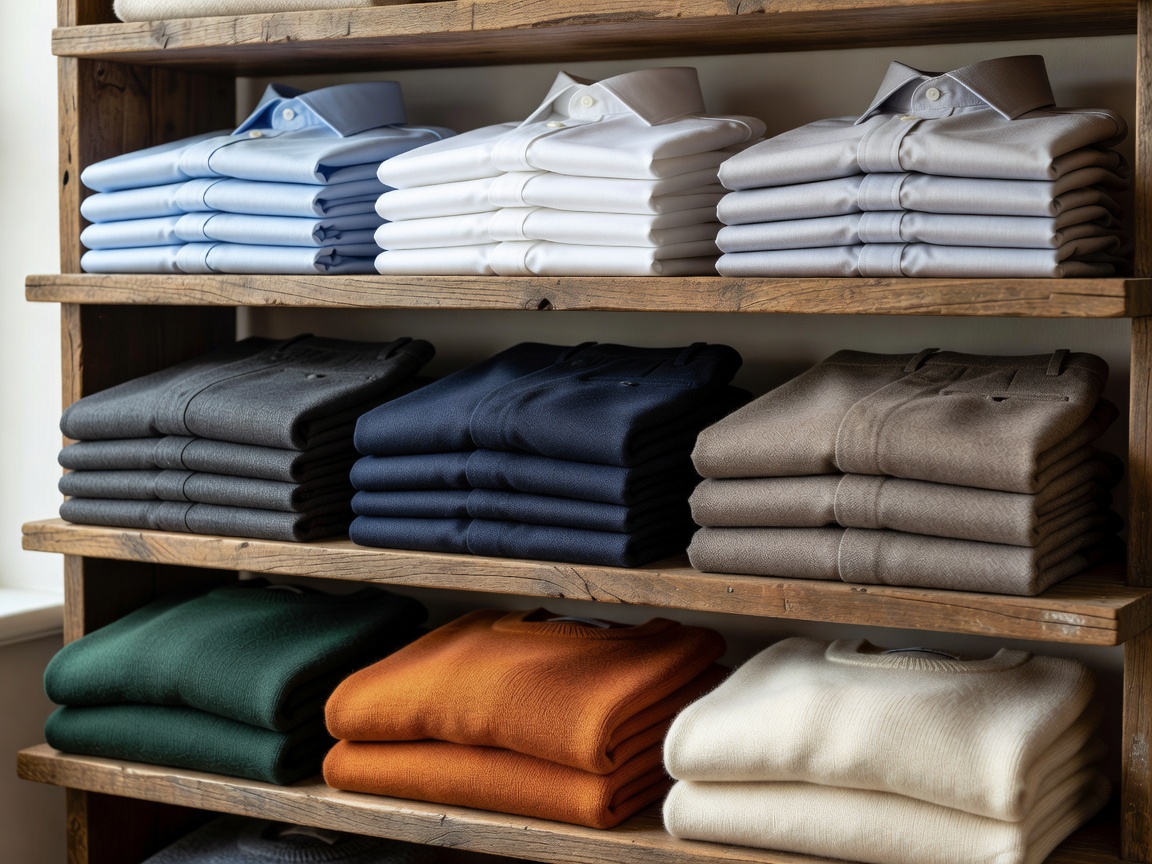
Wardrobe fatigue stems not from having too few clothes, but from owning garments that cannot harmoniously interact. A well-engineered capsule wardrobe operates as a modular system: every jacket, trouser, shirt, and shoe functions across multiple formality tiers while maintaining chromatic and textural balance.
1. The Mathematical Principle of High-Interchangeability
In a randomized wardrobe of twenty items with clashing patterns and dissonant colors, fewer than twenty percent of potential combinations are visually coherent. By contrast, a disciplined 24-piece capsule grounded in neutral color theory (navy, slate grey, ecru, tobacco brown, and forest green) yields over two hundred distinct combinations that never appear mismatched.
The Core Neutral Palette
- Primary Foundations: Midnight Navy and Charcoal Grey (Anchor tailored pieces).
- Secondary Neutrals: Ecru, Off-White, Sky Blue, and Camel (Provide soft contrast).
- Tertiary Earth Accents: Olive Green, Tobacco Brown, and Burgundy (Introduce depth without color vibration).
2. The Complete 24-Piece Inventory Architecture
This curated inventory covers formal professional environments, weekend leisure, and transitional travel across temperate climates:
| Category | Quantity | Item Specifications |
|---|---|---|
| Suits & Outerwear | 5 Items | 1 Navy High-Twist 2-Piece Suit; 1 Charcoal Wool Flannel Suit; 1 Unstructured Navy Hopsack Blazer; 1 Camel Wool Overcoat; 1 Olive Waxed Cotton Field Jacket. |
| Trousers & Bottoms | 5 Items | 2 Mid-Grey Tropical Wool Trousers; 1 British Tan Chino (High-Rise); 1 Off-White Heavy Cotton Twill Trouser; 1 Dark Indigo 14oz Selvedge Denim. |
| Shirts & Knits | 9 Items | 3 White 120/2 Cotton Poplin Dress Shirts; 2 Pale Blue Oxford Cloth Button-Downs (OCBD); 1 Blue & White Bengal Stripe Shirt; 1 Navy Merino Wool Crewneck; 1 Charcoal Cashmere Turtleneck; 1 Oatmeal Wool Cardigan. |
| Footwear & Accessories | 5 Items | 1 Dark Brown Goodyear Welted Cap-Toe Oxford; 1 Snuff Suede Penny Loafer; 1 Burgundy Leather Derby Boot; 1 Dark Brown Full-Grain Leather Dress Belt; 1 Reversible Brown/Black Casual Belt. |
3. Fabric Texture Layering Across Seasons
Interchangeability requires tactile variation. Wearing smooth worsted wool with flat poplin can look sterile. By introducing varying weaves, garments gain dimension even within a monochromatic palette:
Open-Weave Hopsack & Twill
Ideal for sport coats and trousers. The coarse basketweave prevents the jacket from looking like an orphaned suit coat when paired with denim or tailored cotton trousers.
Suede & Brushed Leathers
Snuff suede loafers instantly dial down the formality of grey flannel trousers while simultaneously elevating raw selvedge denim to smart-casual territory.
4. Maintenance, Rotation, and Storage Protocols
Longevity depends heavily on proper maintenance habits:
- Cedar Shoe Trees: Insert split-toe cedar trees into leather shoes immediately upon removal to absorb moisture and preserve last integrity.
- Forty-Eight Hour Garment Rest: Never wear the same wool suit or trouser two days in succession; natural wool fibers require air circulation to release creases and recover tensile spring.
- Brushing Over Dry Cleaning: Use a natural boar-bristle garment brush after each wear to dislodge dust particles. Restrict chemical dry cleaning to once or twice annually to avoid stripping natural lanolin oils from fine wool fibers.