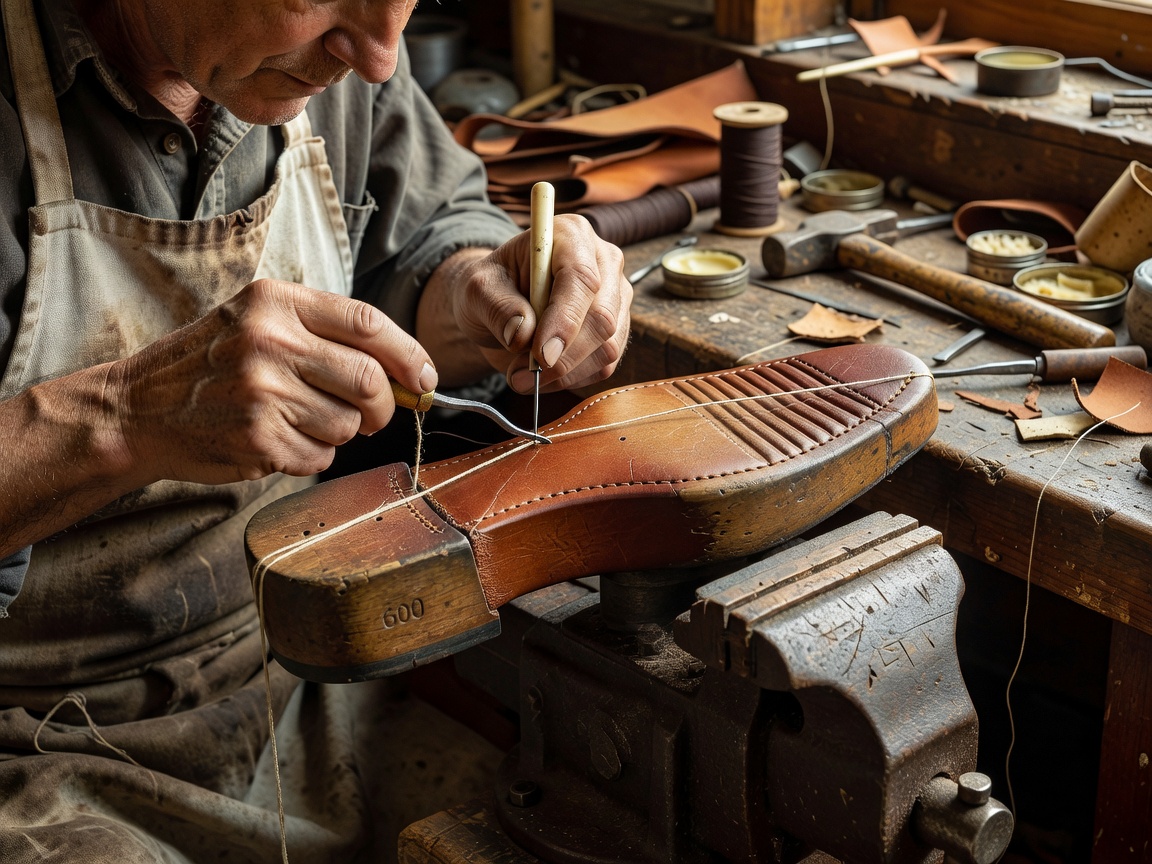
In men’s footwear, the method used to attach the upper leather to the outer sole defines the shoe's lifespan, water resistance, flexibility, and serviceability. While mass-market footwear relies on cemented (glued) assemblies destined for landfill upon sole abrasion, traditional welted footwear is engineered to be resoled repeatedly for decades.
1. Benchmarking Construction Techniques
Every discerning shoe enthusiast must distinguish between the four predominant shoemaking methods:
| Method | Structural Mechanism | Water Resistance | Resoleability |
|---|---|---|---|
| Goodyear Welted | A leather welt strip is machine-stitched to both the insole rib and upper, then stitched to outsole with a cork footbed cavity. | High (Cork layer acts as moisture and thermal buffer). | Unlimited (Cobbler replaces sole without disrupting upper). |
| Blake Stitched | A single stitch runs directly from inside the insole through the upper and through to the outer sole. | Moderate to Low (Water can wick along through-stitch). | 3 to 4 Times (Requires specialized Blake machinery). |
| Blake-Rapid | Blake stitch connects insole to a midsole; rapid stitch connects midsole to outsole. | Moderate to High. | High (Midsole remains intact during outer sole swaps). |
| Norwegian / Storm Welt | Upper leather is turned outward and double-stitched visibly along the perimeter. | Maximum (Engineered for alpine moisture defense). | Unlimited (Extremely robust structural welt). |
2. The Anatomy of Lasts: Shape, Width, and Pitch
The last (the solid sculptural form around which leather is molded) determines the aesthetic character and orthopedic comfort of a shoe. Last geometry varies significantly by regional shoemaking tradition:
The British Round / Almond Last
Characterized by a balanced, anatomical toe box that curves gently without extreme elongation. Designed for comfortable walking across varied pavements, providing generous ball-of-foot volume and a secure heel cup.
The Italian Chiseled / Soft-Square Last
Features aggressive waist tapering, a sleek low-instep profile, and sharp geometric facets at the toe. Prioritizes sleek silhouette and formal dress pairing with slim Italian tailoring.
3. Leather Grades: From Full-Grain Calf to Cordovan
Leather quality dictates how a shoe patinas over years of conditioning and polish:
I. Full-Grain French & German Box Calf
The gold standard for dress Oxfords and Derbies. The topmost layer of the hide remains completely un-sanded and un-buffed, retaining its natural grain density, breathability, and capacity to absorb beeswax and turpentine polishes.
II. Shell Cordovan (Equine Fibrous Membrane)
Derived from the specific subcutaneous fibrous muscle layer beneath the rump of equine hides. Vegetable-tanned over six months, Shell Cordovan is virtually non-porous, highly water-resistant, and develops subtle rolling waves across the vamp rather than fine creasing.
III. Corrected-Grain & Bookbinder Leathers (To Be Avoided)
Inferior hides sanded to remove natural surface blemishes and coated with a thick polyurethane or acrylic lacquer. While initially shiny in retail displays, corrected grain cannot absorb nourishing leather balms and will crack permanently along flex points within months of regular wear.
4. Essential Maintenance Rituals
Extend the operational life of quality welted shoes with three foundational practices: allow 24 hours of rest on unfinished cedar trees between wearings; condition the upper leather with natural emulsion creams every 8 to 12 wears; and treat the exposed leather edge dressing to prevent moisture ingress into the Goodyear welt seam.